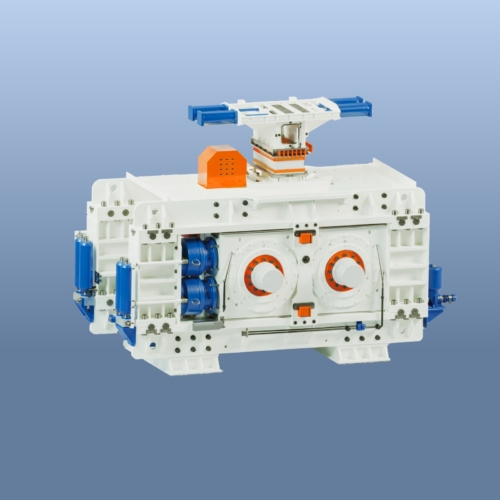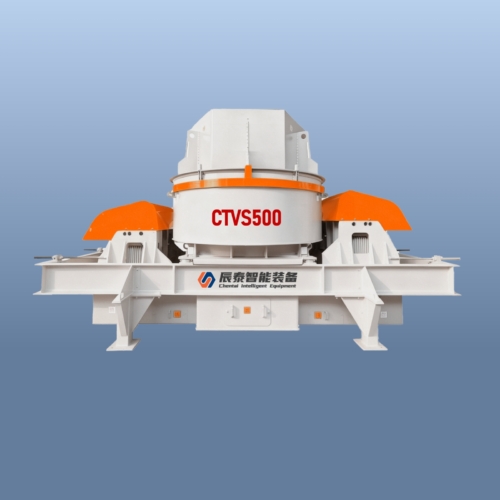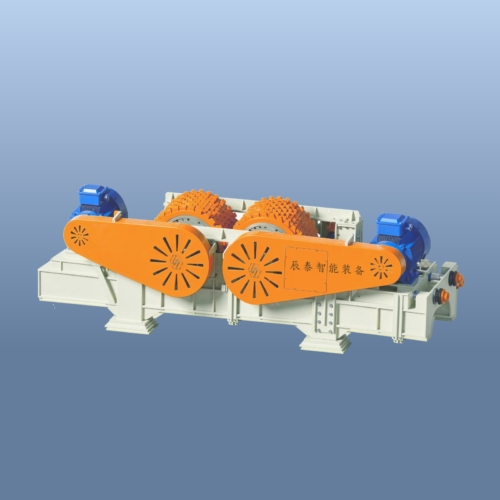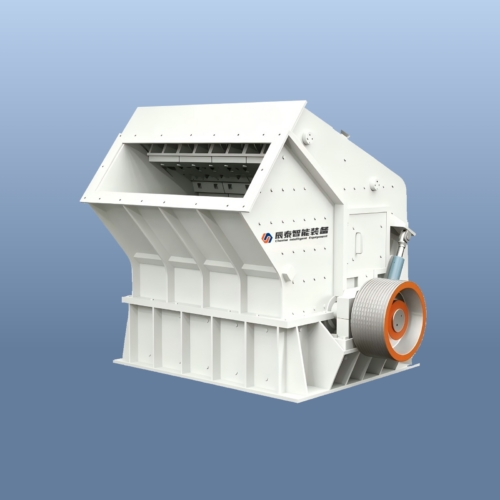
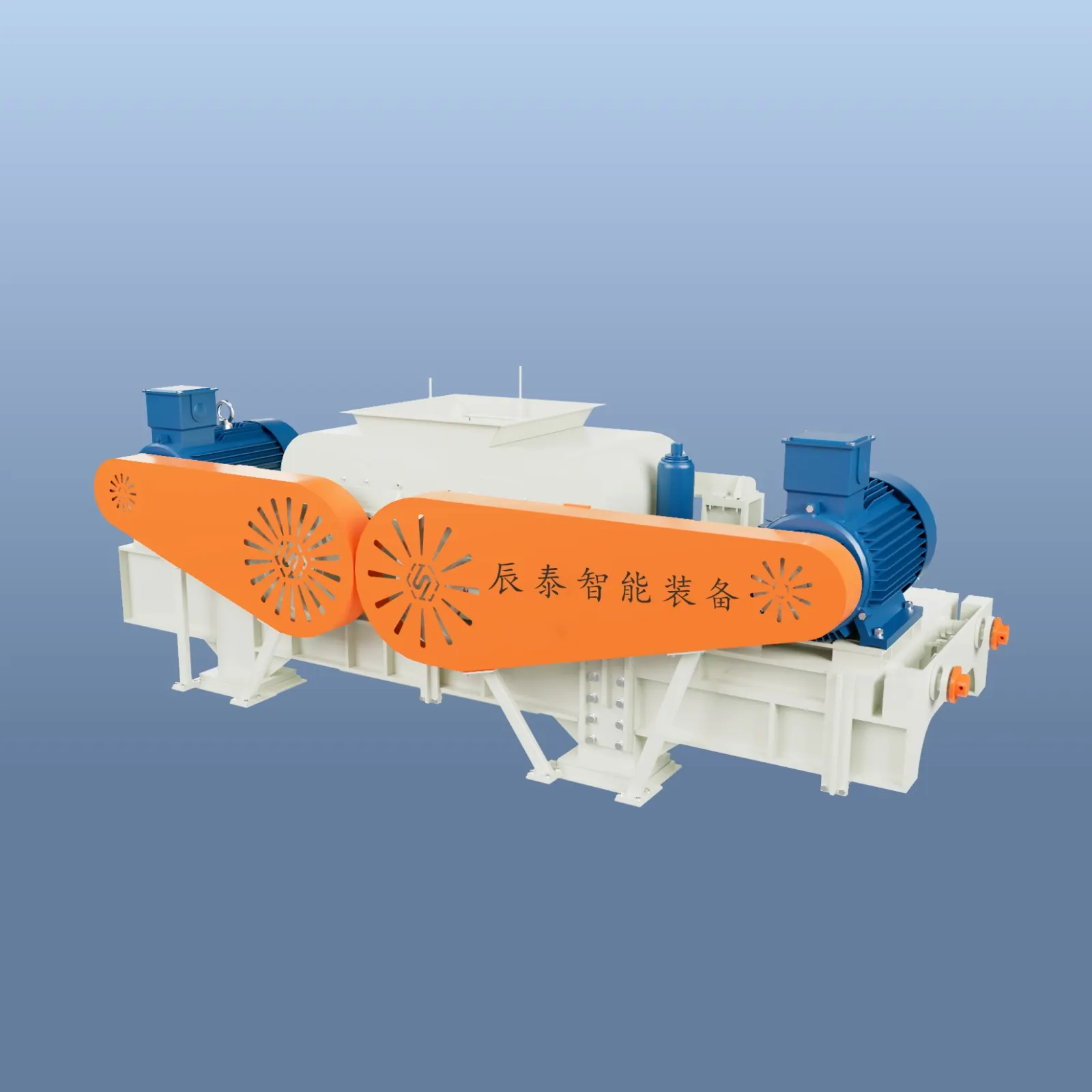
The CTNQ series fully hydraulic, internal drive intelligent double roller crushers developed by Chentai Equipment have been refined over years of research and development and have become a new, highly efficient and energy saving double roller crusher of domestic invention. They are the only product in China holding the invention patent for a hydraulic internal drive planetary gear double roller crusher, breaking the traditional pattern of the industry with core technology and bringing new momentum to the crushing field.
Overview
The CTNQ series hydraulic double roller crusher uses hydraulic roller-gap adjustment, so the discharge size is set and corrected from the hydraulic side rather than by mechanical shimming. Material fed between the two rollers is drawn into the narrowing gap and broken in compression, which gives a controlled product size with a consistent size distribution from one setting to the next. It is used for sand making and for fine crushing of medium-hard materials, and gives a uniform product; because the gap moves through the hydraulic system, it can be re-set quickly when the product specification changes.
Product Features
- Hydraulic gap adjustment between the two rollers — the setting is made from the hydraulic side without dismantling the machine
- Discharge size set and held under control, so the finished product stays inside the required specification between maintenance stops
- Compact structure that sits behind a coarse crushing or screening stage without taking up much room in the line
- Uniform product size distribution, which suits sand making and the processing steps that follow it
- Two rollers driven by independent motors, keeping the crushing action steady along the length of the rollers
Basic Parameters
MODEL · CTNQ| Model | Roller Diameter Roller diameter (mm) |
Roller Length Roll length (mm) |
Feed Size Feed particle size (mm) |
Power (KW) Power(kw) |
Capacity (t/h) Capacity (t/h) |
Discharge size (mm) |
|---|---|---|---|---|---|---|
| CTNQ45 | 1000 | 500 | ≤30 | 45*2 | 60-80 | 0-5 |
| CTNQ55 | 1000 | 600 | ≤30 | 55*2 | 70-100 | 0-5 |
| CTNQ90 | 1100 | 820 | ≤30 | 90*2 | 90-160 | 0-5 |
| CTNQ110 | 1100 | 1000 | ≤30 | 110/132*2 | 140-220 | 0-5 |
| CTNQ160 | 1125 | 1000 | ≤30 | 160*2 | 180-280 | 0-5 |
| CTNQ200 | 1150 | 1000 | ≤30 | 200/220*2 | 220-320 | 0-5 |
| CTNQ315 | 1200 | 1200 | ≤30 | 250/315*2 | 250-400 | 0-5 |
| CTNQ355 | 1480 | 1200 | ≤30 | 355/400*2 | 290-520 | 0-5 |
| CTNQ500 | 1600 | 1200 | ≤30 | 500*2 | 450-650 | 0-5 |
- * The above selection parameters are for reference only. Specific selection parameters should be based on test screening data and provided after the screening process plan is designed!
or WeChat chentai202605 · +86-570-8885527
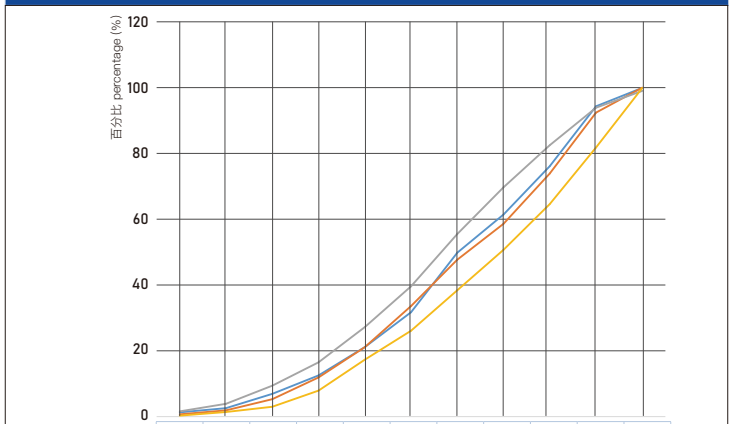
Particle Size Curve
Applications
The CTNQ hydraulic double roller crusher pulls material between two rollers and crushes it in the narrowing gap, which suits fine reduction where the output size must be held to a specification. The compression action also produces a high proportion of sand-sized particles with a predictable size distribution, so the machine is often placed where a graded product is required rather than where lump reduction alone matters. Typical duties include:
- Sand making from medium-hard materials
- Fine crushing where a discharge size of 0–5 mm is required
- Reduction of material fed at ≤30 mm to a controlled product
- Duties that need a uniform particle size distribution in the finished product
- Final crushing stages ahead of a screening step in an aggregate line
- Producing a graded feed for further processing where the top size has to stay consistent
- Reworking crushed product that must be brought back inside a narrow size specification
The crusher is normally placed after a coarse crushing stage: feed at ≤30 mm arrives from a crusher or screen, and the discharge goes to screening or to the next process. Two rollers with independent motors drive the machine, and the hydraulic system sets the gap that determines the product size. It can run as a stand-alone unit or as part of a continuous line.
How to Choose the Right CTNQ Model
Three factors decide which CTNQ model fits your operation:
- Required output — match your target tonnage against the “Capacity (t/h)” column: CTNQ45 covers 60–80 t/h, CTNQ110 covers 140–220 t/h, and CTNQ500 covers 450–650 t/h. Read the column upwards until the range covers the tonnage you need, and remember that reported capacity depends on the material and on the gap setting.
- Feed size — the “Feed particle size(mm)” column lists ≤30 mm for every model in the table, so material must be reduced to that size before feeding. Because the limit is the same across the range, the choice between models is driven by output and roller dimensions rather than by lump size.
- Power and roller size — installed power runs from 45*2 kW on CTNQ45 to 500*2 kW on CTNQ500, with roller diameter from 1000 mm to 1600 mm and roller length from 500 mm to 1200 mm. The roller dimensions govern how much material can pass through the gap in one pass, while the power figure shows the supply the machine needs on site.
All models list a discharge size of 0–5 mm, so once the throughput and feed size are fixed, the choice follows the roller dimensions and power.
Operation & Maintenance Tips
- Set the roller gap through the hydraulic system when the product specification changes — this is the control that holds the discharge size, and it can be moved without dismantling the machine.
- Check the hydraulic system for pressure and leaks at the intervals set for the machine; the gap setting depends on it, and a drifting pressure shows up as a change in the product size.
- Feed within the ≤30 mm limit so the rollers take the material they are sized for.
- Inspect the roller surface during planned stoppages and record the wear that has built up, since it affects both the product size and the power drawn by the machine.
- Keep the feed point centred so material spreads along the full roller length instead of loading one area, and clear adhered material from the housing around the rollers.
- Listen for abnormal noise or vibration at the bearings and drives during the stoppage and deal with it before restarting; Chentai after-sales service performs an initial inspection 3–6 months after commissioning.
CTNQ Hydraulic Double Roller Crusher FAQ
Which CTNQ model do I need for about 100 t/h?
According to the “Capacity (t/h)” column, CTNQ55 (70–100 t/h) and CTNQ90 (90–160 t/h) both cover 100 t/h. The actual output depends on the material and the gap setting, so compare the two on the rest of the row as well: roller diameter of 1000 mm and roller length of 600 mm on CTNQ55, against 1100 mm and 820 mm on CTNQ90, with power of 55*2 kW and 90*2 kW respectively.
What feed size does the crusher accept?
Every model in the table is listed with a feed particle size of ≤30 mm; material should be crushed or screened to that size before feeding. The limit is the same across the range, so changing model does not change what can be fed into the machine.
What discharge size can be produced?
The table lists a discharge size of 0–5 mm for all models, which is the range the machine is set up to hold. The exact product inside that range is fixed by the gap selected through the hydraulic system and by the properties of the material, so the setting can be corrected whenever the specification or the feed changes.
How is the discharge size adjusted?
Through hydraulic roller-gap adjustment — the hydraulic system sets the distance between the two rollers, so the product size can be changed without mechanical shimming. Adjustment is made from the hydraulic side while the machine is at rest, and the result should be confirmed by checking the product afterwards.
Product Gallery
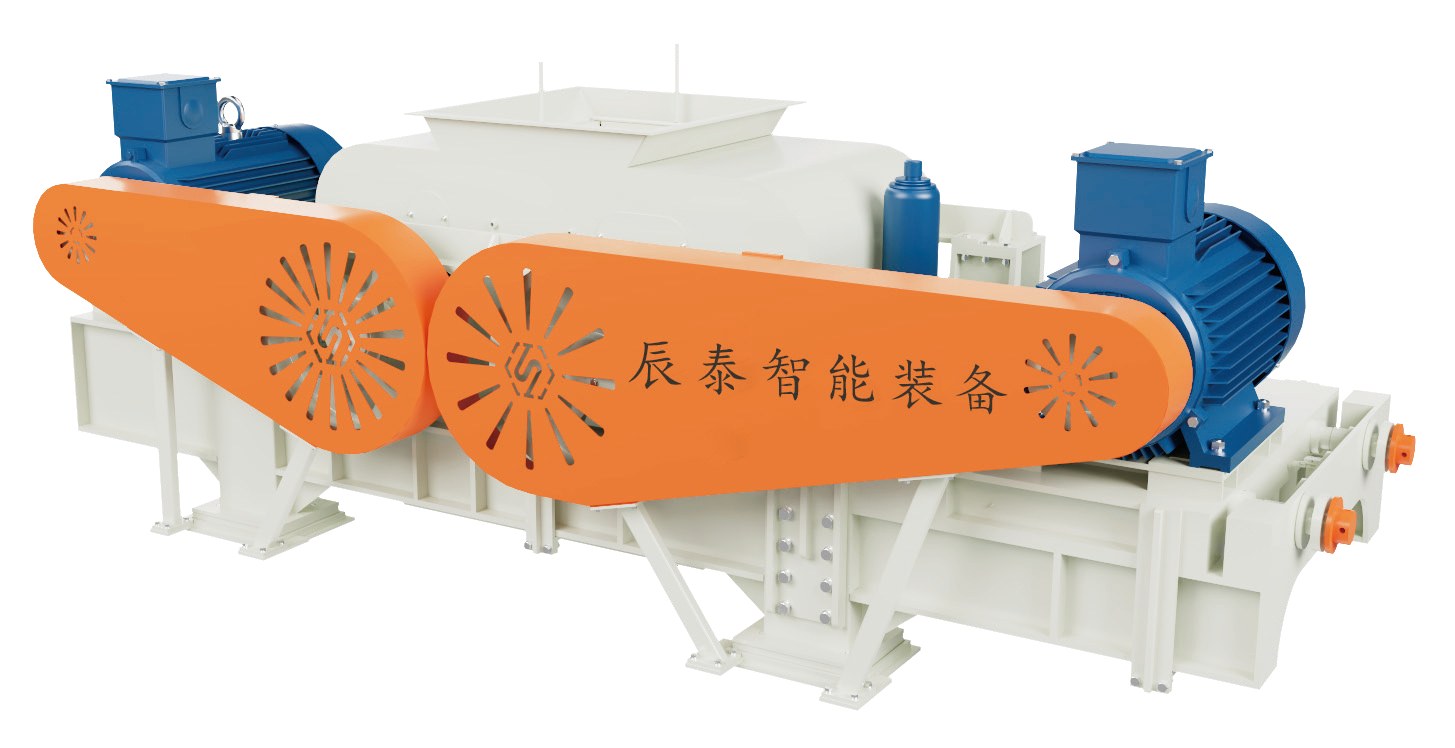
Product photos of CTNQ Hydraulic Double Roller Crusher from our catalogue.
Other Models in the Same Series
Other optional models for the same process step; compare the basic parameter table and the selection notes, then view the details directly.
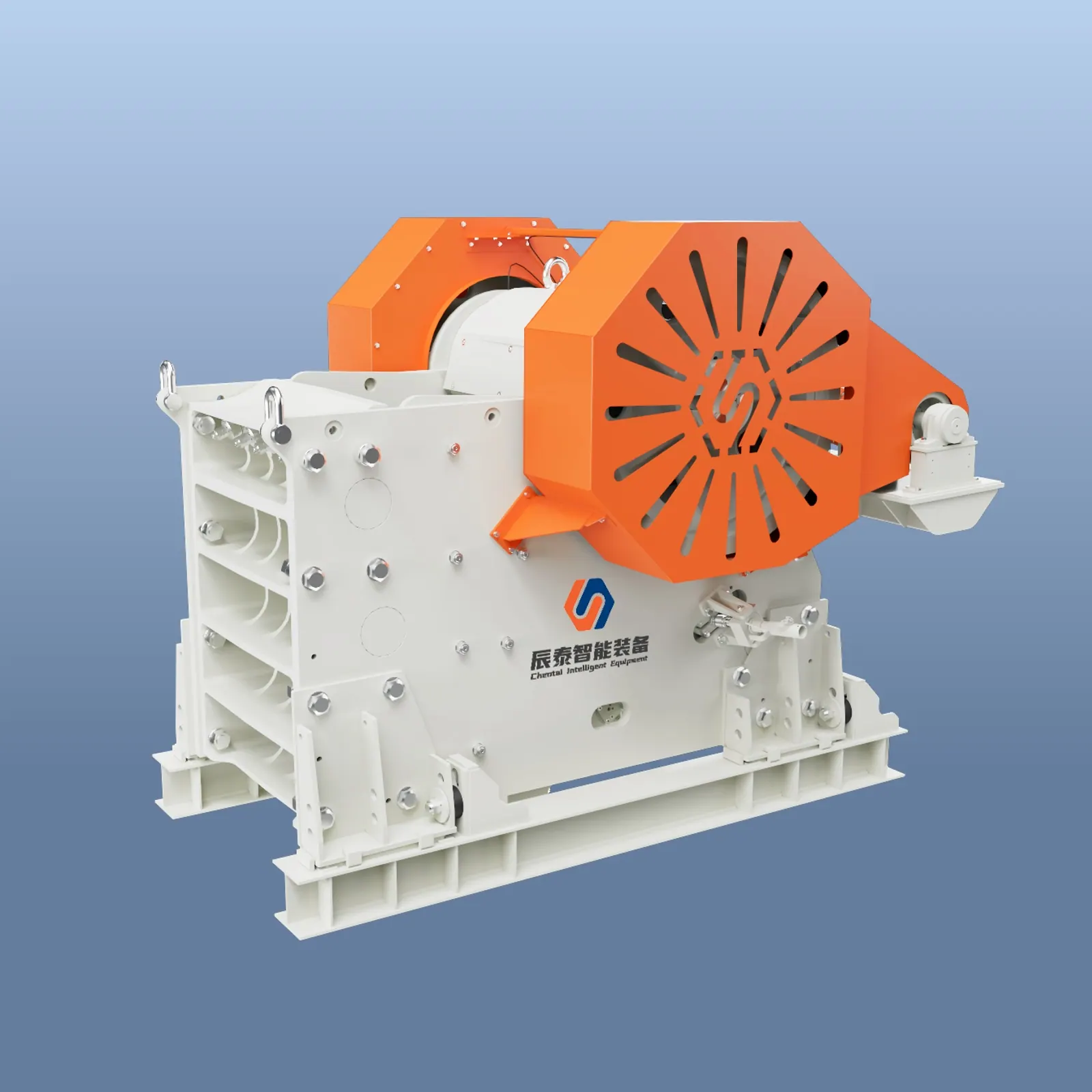 CTJCCrushing Equipment
Jaw Crusher
Jaw Crusher
The CTJC jaw crusher is a new generation, high efficiency coarse crushing machine developed by Chentai Equipment by absorbing advanced technology from…
- High output
- Large crushing ratio
- Low wear
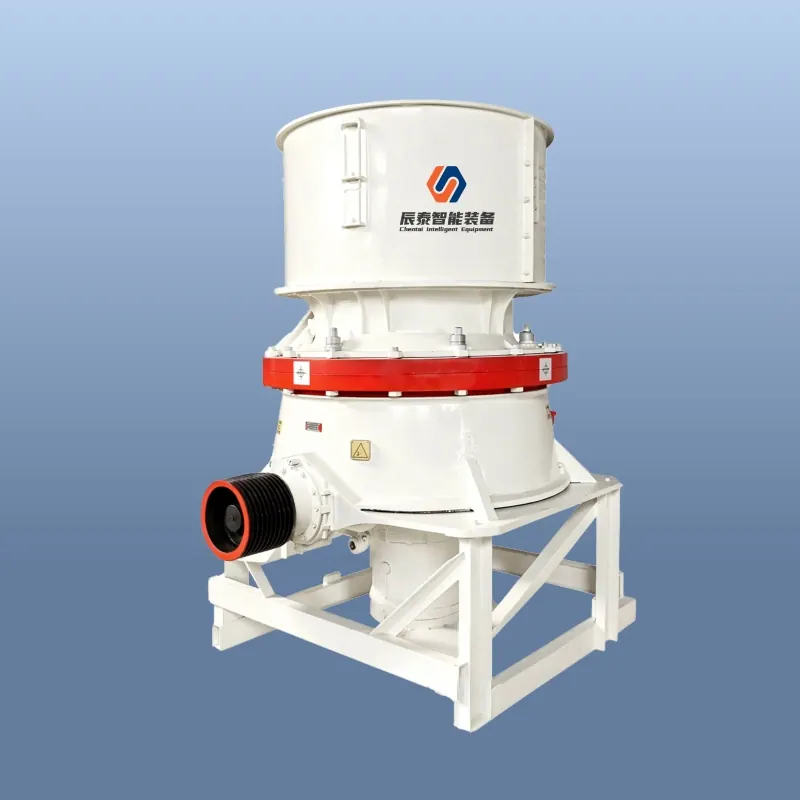 CTCS / CTCHCrushing Equipment
CTCS/CTCH Single Cylinder Hydraulic Cone Crusher
Single Cylinder Hydraulic Cone Crusher
The single cylinder hydraulic cone crusher is the latest generation machine developed by Chentai Equipment by absorbing advanced technology from China…
- Efficient crushing
- Smart control
- Multiple cavity options
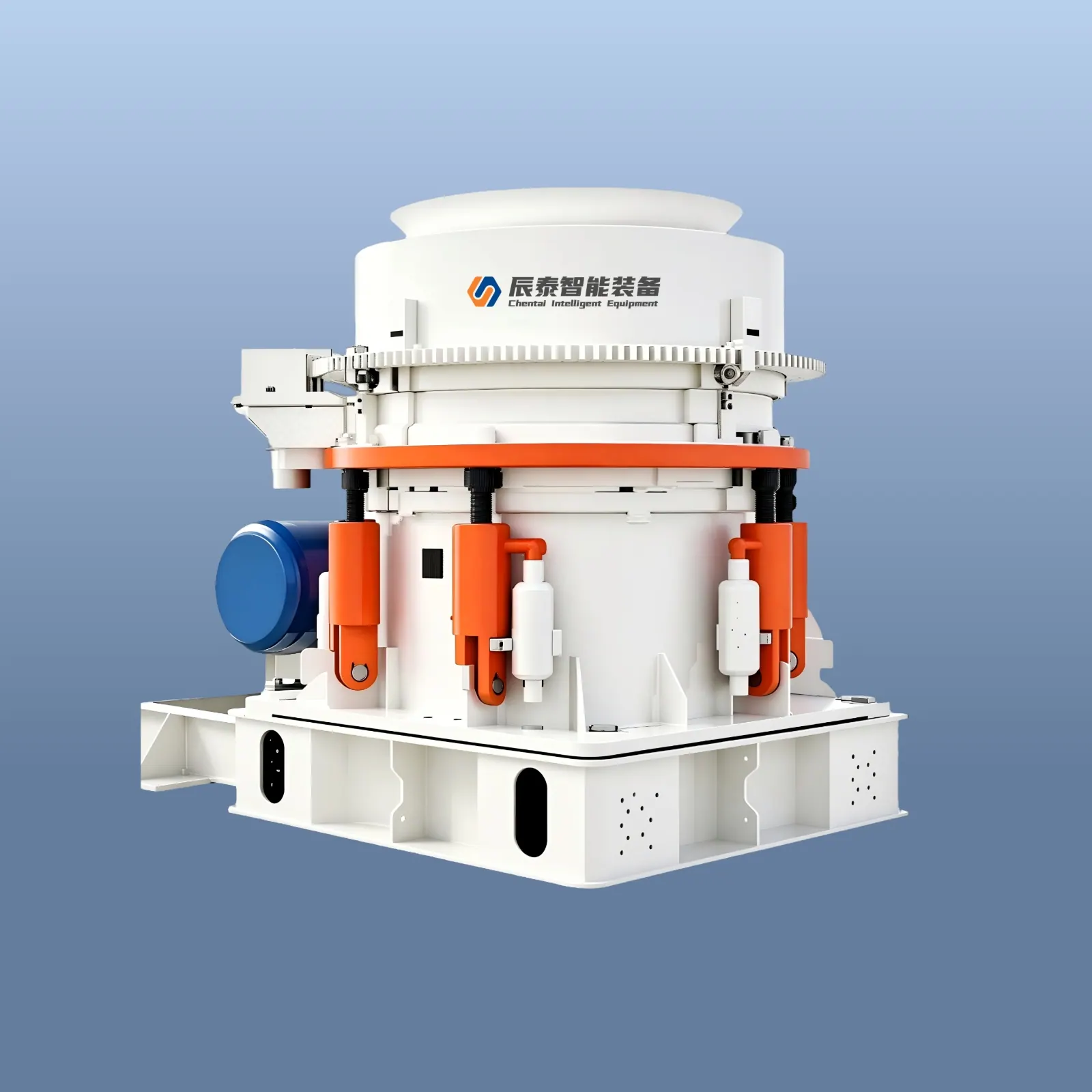 CTHPCrushing Equipment
Multi-Cylinder Hydraulic Cone Crusher
Multi-Cylinder Hydraulic Cone Crusher
The multi-cylinder hydraulic cone crusher manufactured by Chentai Equipment, combining advanced technology from China and abroad, is built on the prin…
- Powerful crushing
- Precise control
- Flexible adjustment
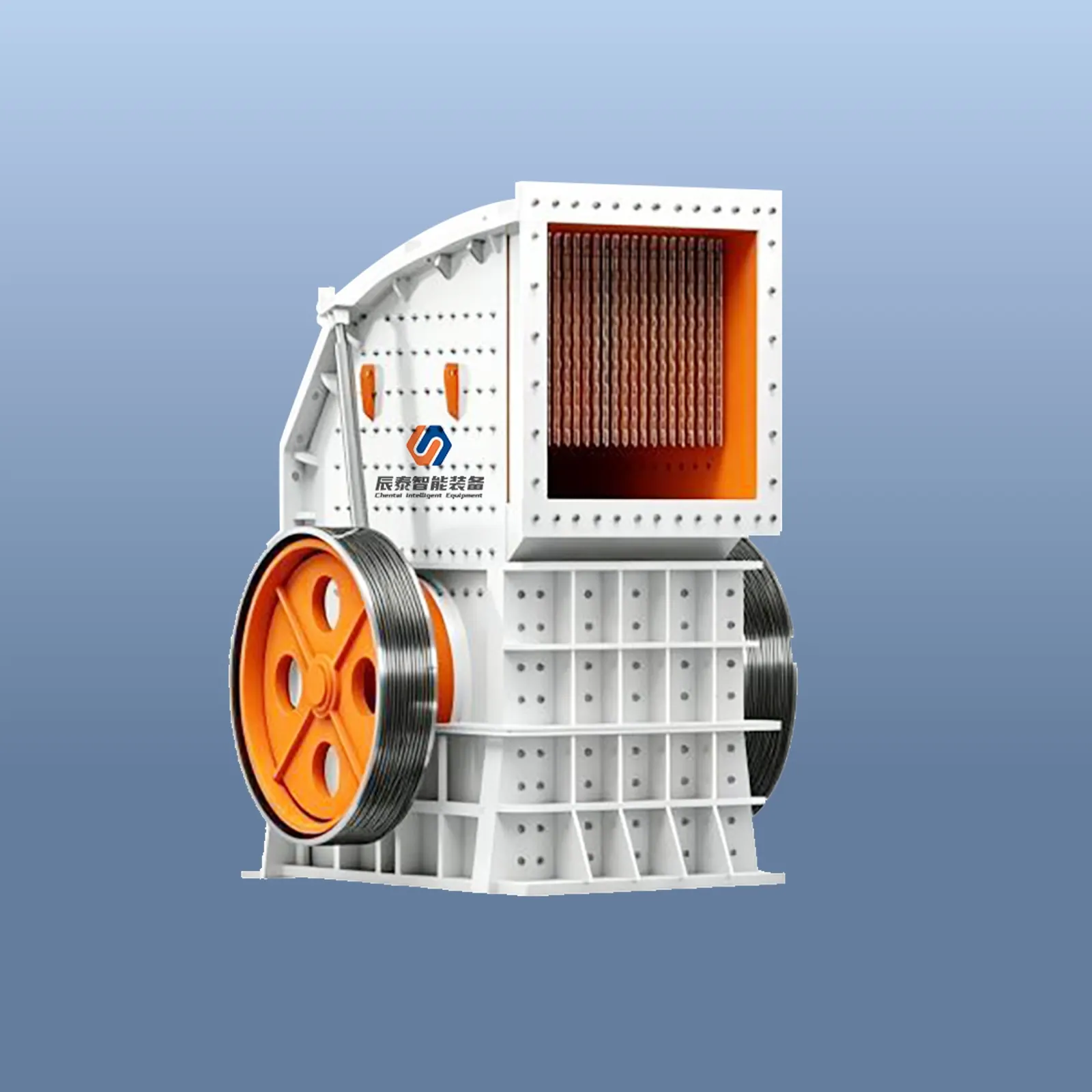 CTPDFCrushing Equipment
Single Stage Heavy Hammer Crusher
Single Stage Heavy Hammer Crusher
The single stage heavy hammer crusher manufactured by Chentai Equipment, combining advanced technology from China and abroad, integrates coarse crushi…
- High output
- Single-pass shaping
- Adjustable output size
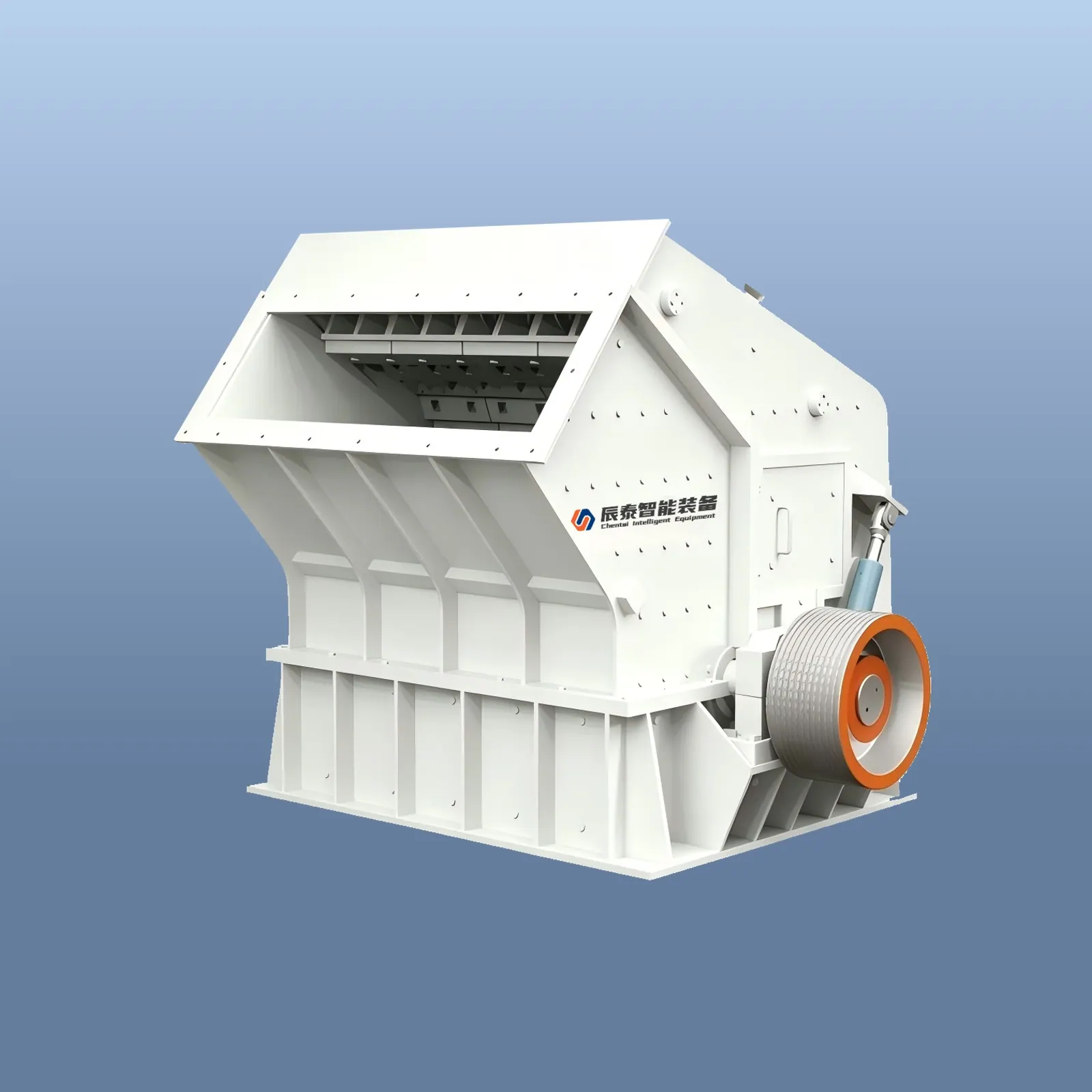 CTPFICrushing Equipment
Impact Crusher
Impact Crusher
The impact crusher is a high efficiency crushing unit developed by Chentai Equipment on the basis of leading crushing technology from China and abroad…
- Impact crushing
- Sound structure
- Easy adjustment
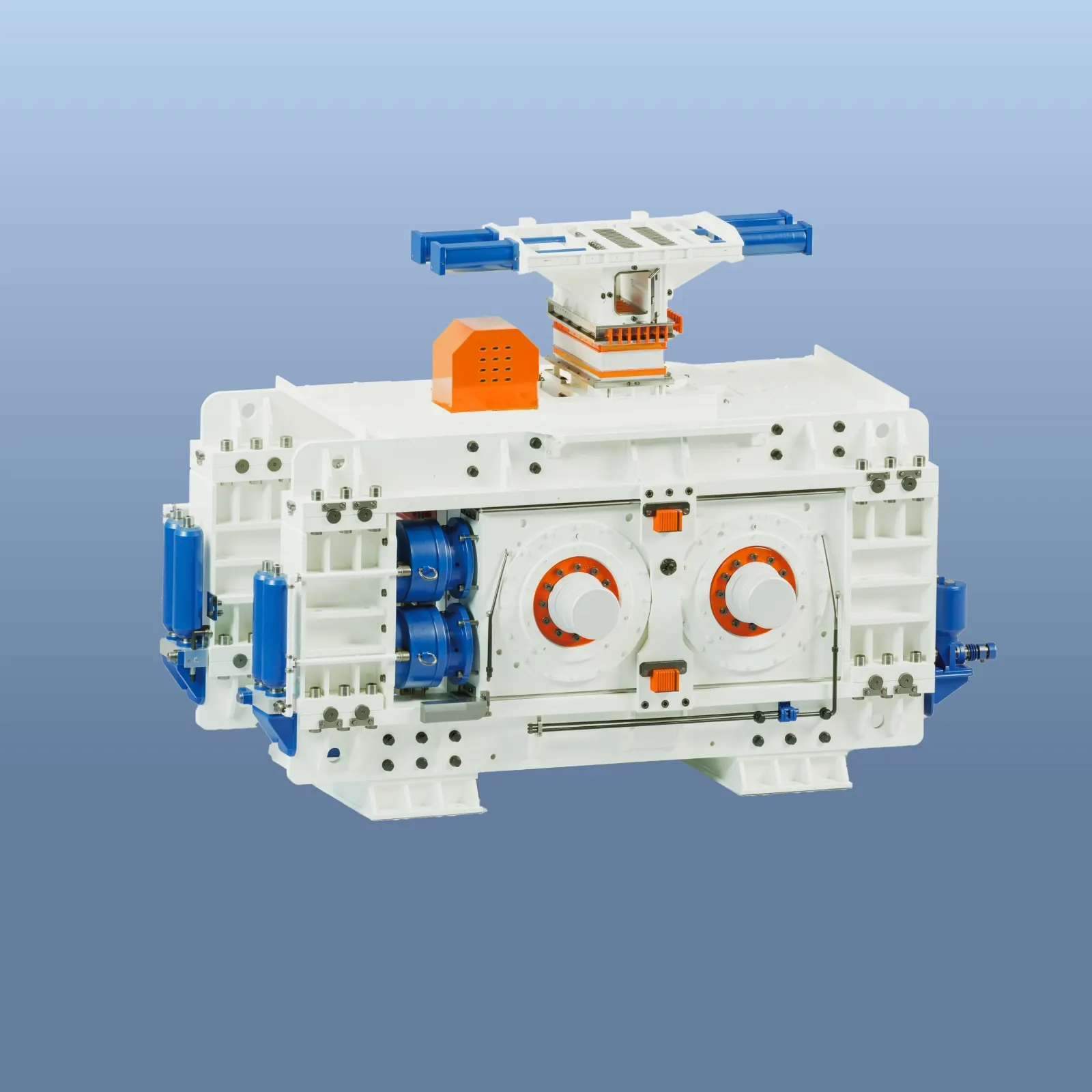 CTKGCrushing Equipment
High Pressure Roller Mill
High Pressure Roller Mill
The hydraulic system manufactured by Chentai Equipment applies the concept of “constant roll gap control within a defined pressure range”, which reduc…
- More efficient and reliable
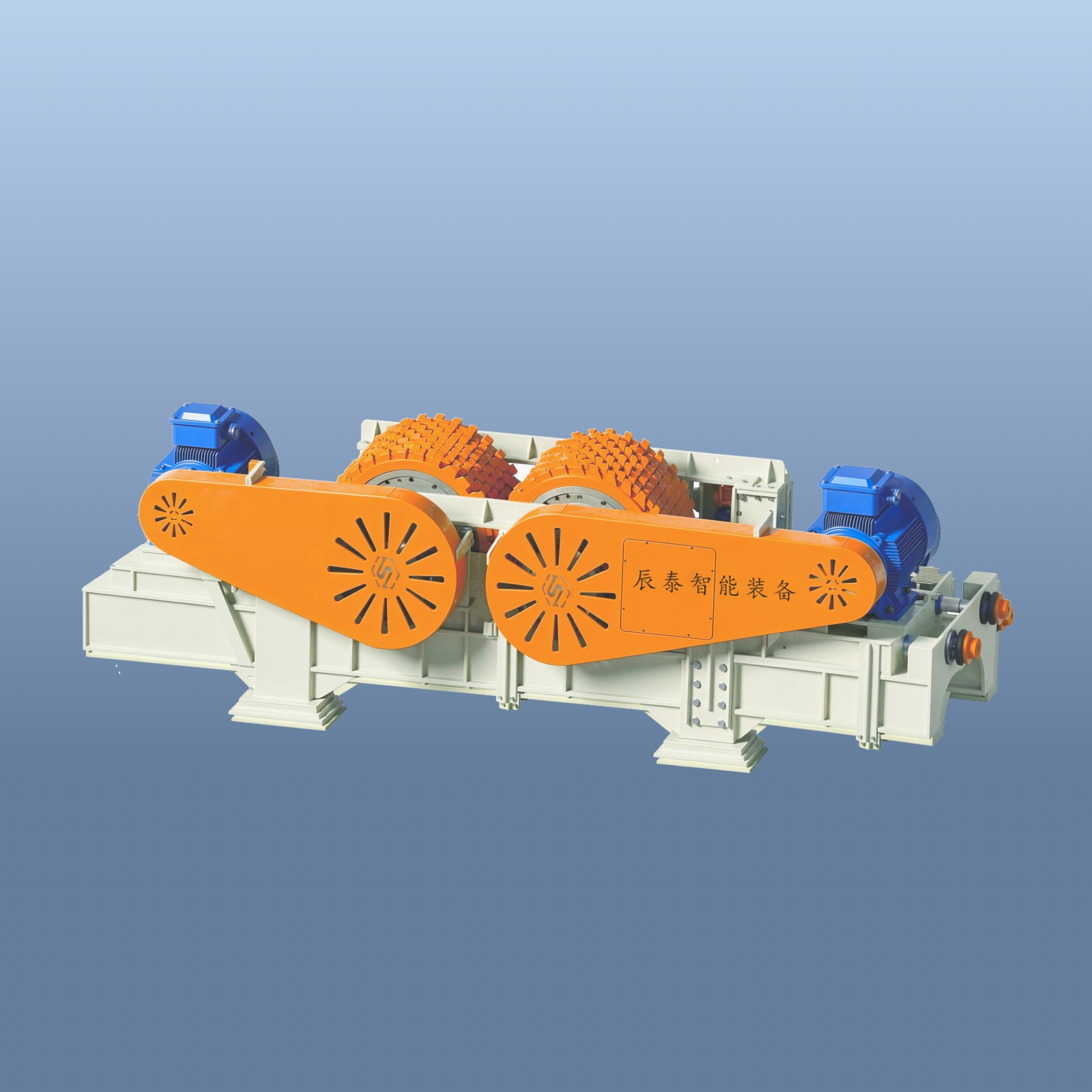 CTSCCrushing Equipment
Toothed Roller Crusher
Toothed Roller Crusher
The toothed roller crusher developed by Chentai Equipment is a new, highly efficient and energy saving machine of domestic invention, and the only hol…
- Screening and crushing
- Precise particle size
- Durable and serviceable
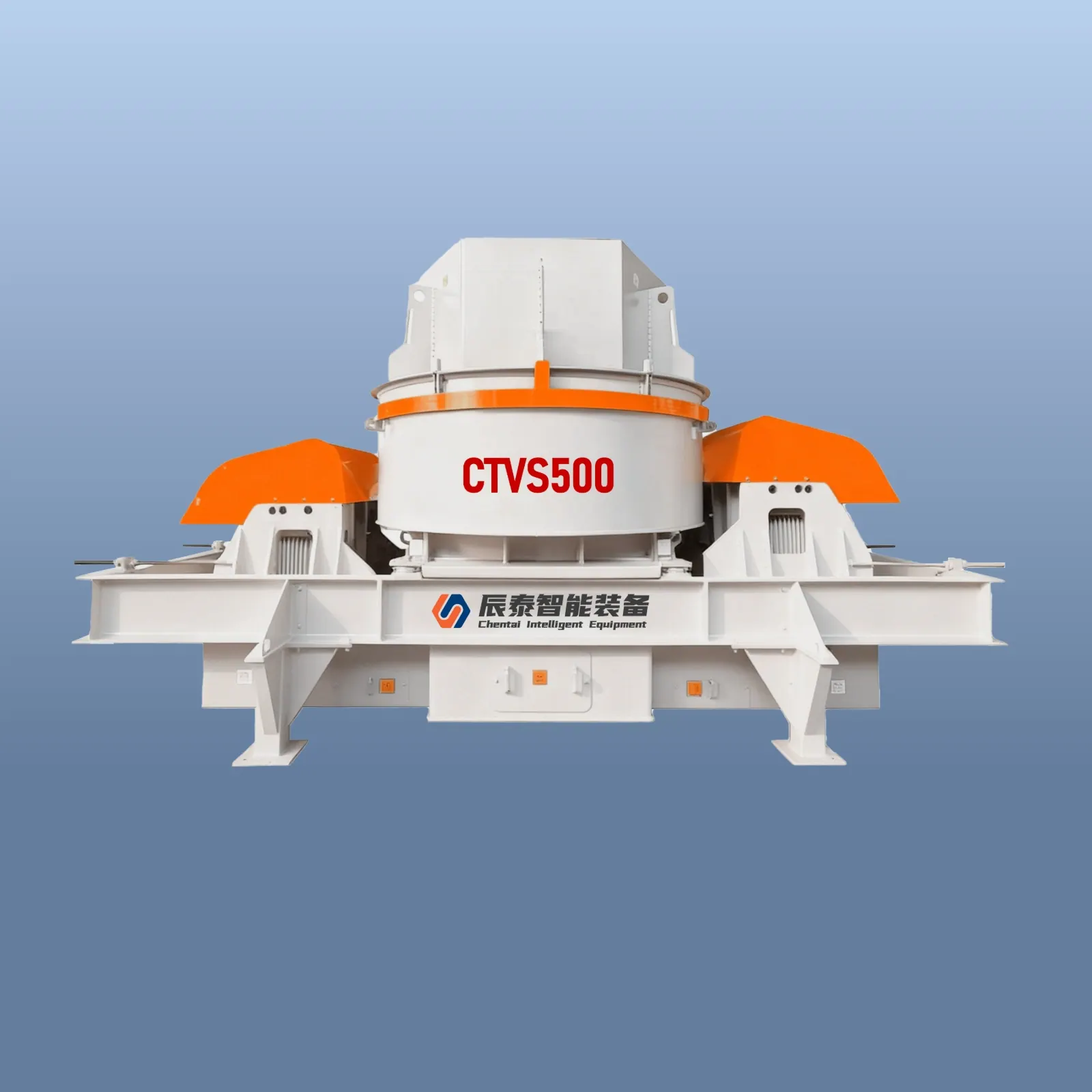 CTVSCrushing Equipment
Vertical Shaft Impact Crusher
Vertical Shaft Impact Crusher
The CTVS series vertical shaft impact crushers manufactured by Chentai Equipment combine a unique rotor, wear resistant materials and an optimized str…
- Multiple rotor options
- High crushing ratio
- Low consumable wear