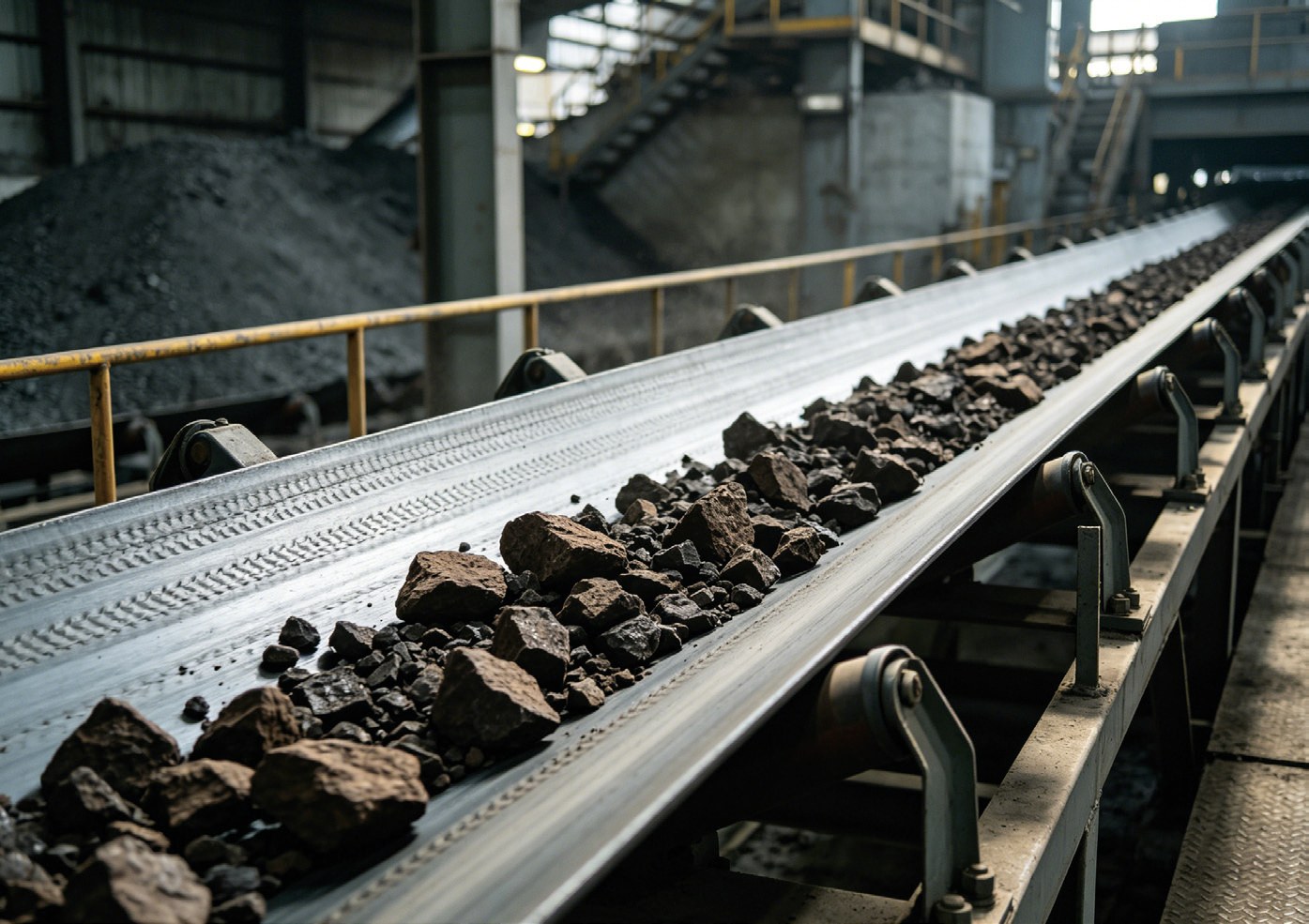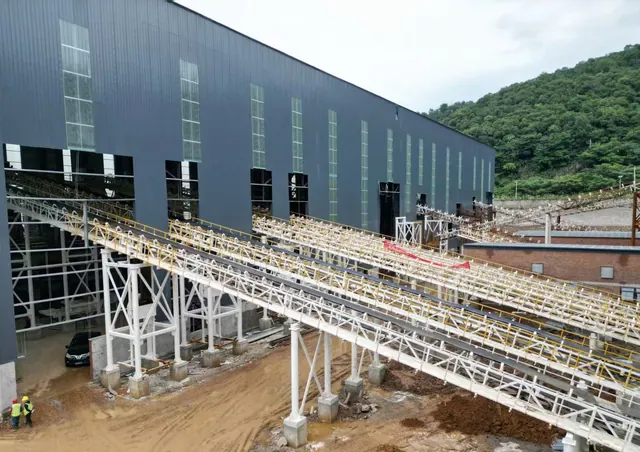
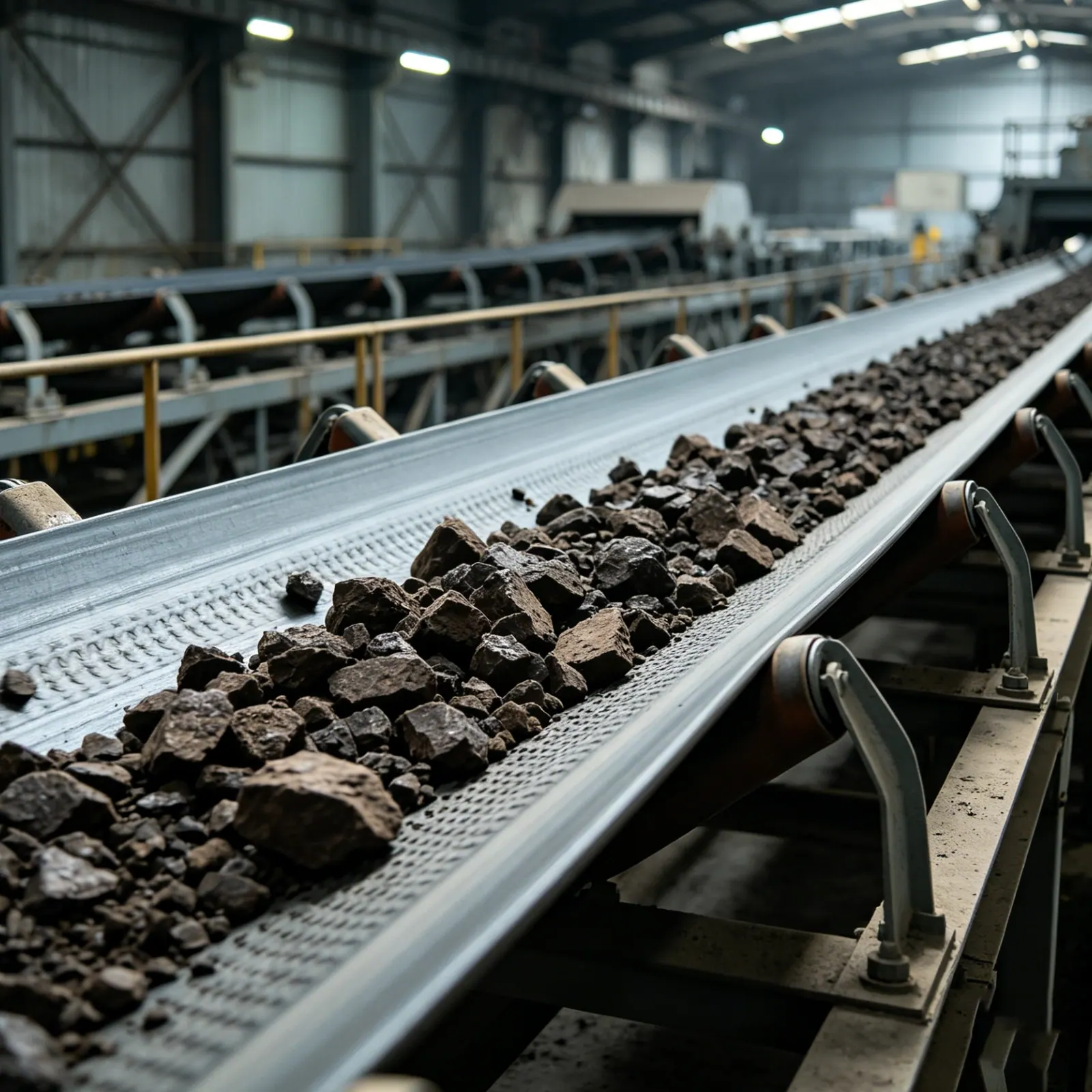
The DTⅡ belt conveyor is a general purpose series and an upgraded successor to the TD75 and DX series. It is divided into light, medium and heavy types and offers clear improvements over the TD75 type in material, structural design, manufacturing precision, conveying capacity and reliability. Its range of application is therefore wider, with greater throughput and longer conveying distance.
Overview
The DTII belt conveyor is a general-purpose series developed as the successor to the TD75 and DX series, and is available in light, medium and heavy-duty configurations. Against TD75 it improves material selection, structural design, manufacturing precision, conveying capacity and operational reliability, which gives a broader range of applications, higher throughput and longer conveying distances. Belt conveyors transport bulk materials and packaged goods in mineral processing plants and are widely used in mining, metallurgy and coal.
Product Features
- Light, medium and heavy-duty configurations to suit the duty
- Standardized components across the series, which simplifies spare parts handling
- Simple structure that is easy to maintain
- Can run as a standalone unit or be combined with other conveying equipment into horizontal or inclined systems
- Higher conveying capacity and longer conveying distances than the TD75 series it succeeds
Basic Parameter Table
MODEL · DTII| Model | Device specifications (mm) | Capacity (t/h) | Belt speed (m/s) |
|---|---|---|---|
| B650 | 650 | 100-300 | 1.25-2.5 |
| B800 | 800 | 200-450 | 1.25-2.5 |
| B1000 | 1000 | 300-600 | 1.25-2.5 |
| B1200 | 1200 | 600-1000 | 1.25-2.5 |
| B1400 | 1400 | 800-1500 | 1.25-2.5 |
| B1600 | 1600 | 1200-2000 | 1.25-2.5 |
| B1800 | 1800 | 2000-3000 | 1.25-2.5 |
or WeChat chentai202605 · +86-570-8885527
Applications
The DTII belt conveyor moves bulk material and packaged goods between process stages in a plant. Typical duties include:
- Transport of bulk material in mineral processing plants
- Conveying of ore, concentrate and other products in mining and metallurgy
- Coal handling in preparation and utilization plants
- Transfer of packaged goods between storage and dispatch
One conveyor can run as a standalone unit, or several conveyors can be combined with other conveying equipment to build a horizontal or inclined system that follows the layout of the production line. Light, medium and heavy-duty configurations are available, so the same series covers both light transfer duties and heavy primary conveying.
How to Choose the Right DTII Model
Three factors decide which DTII model fits your operation:
- Required output — match your tonnage against the “Capacity (t/h)” column: B650 covers 100–300 t/h, B1000 covers 300–600 t/h, and B1800 covers 2000–3000 t/h.
- Belt width — the “Device specifications (mm)” column runs from 650 mm (B650) to 1800 mm (B1800); select the width that suits the required throughput and the material being handled.
- Belt speed — the table lists a belt speed of 1.25–2.5 m/s across all models, so throughput is set by combining belt width with the speed chosen for the material.
The duty rating (light, medium or heavy) should be matched to the material and the operating conditions as well, since it determines the structural configuration of the conveyor.
Operation & Maintenance Tips
- Because components are standardized across the series, keep spare parts for the belt width and duty rating in stock so repairs do not hold up the line.
- The simple structure is designed for easy maintenance — schedule routine checks of the belt, idlers and drive so misalignment or wear is found before it stops the conveyor.
- Where several conveyors are combined into one system, confirm the transfer points and the sequence of starts before running the line; Chentai after-sales service performs an initial inspection 3–6 months after commissioning.
DTII Belt Conveyor FAQ
Which DTII model do I need for about 600 t/h?
According to the “Capacity (t/h)” column, B1000 (300–600 t/h) and B1200 (600–1000 t/h) both cover 600 t/h. The actual figure depends on the belt speed chosen within the 1.25–2.5 m/s range and on the material.
What belt speeds are available?
The table lists 1.25–2.5 m/s for every model in the series, from B650 through B1800.
Can several conveyors be combined?
Yes. Multiple belt conveyors can be combined with other conveying equipment to form horizontal or inclined conveying systems, and each unit can also run standalone according to the process requirements.
Which industries is it used in?
Belt conveyors are used in mining, metallurgy and coal, and as auxiliary equipment in mineral processing plants for transporting bulk materials and packaged goods.
Product Gallery
Product photos of DTII Belt Conveyor from our catalogue.