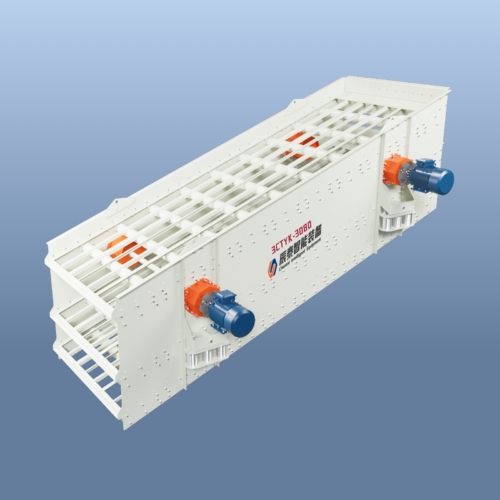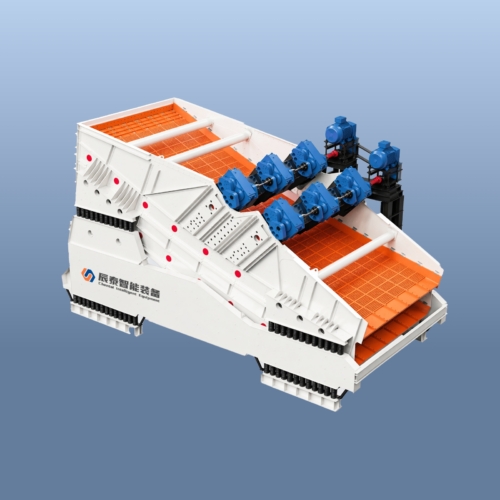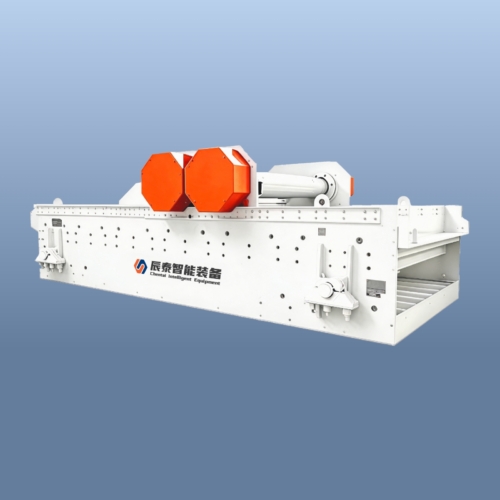
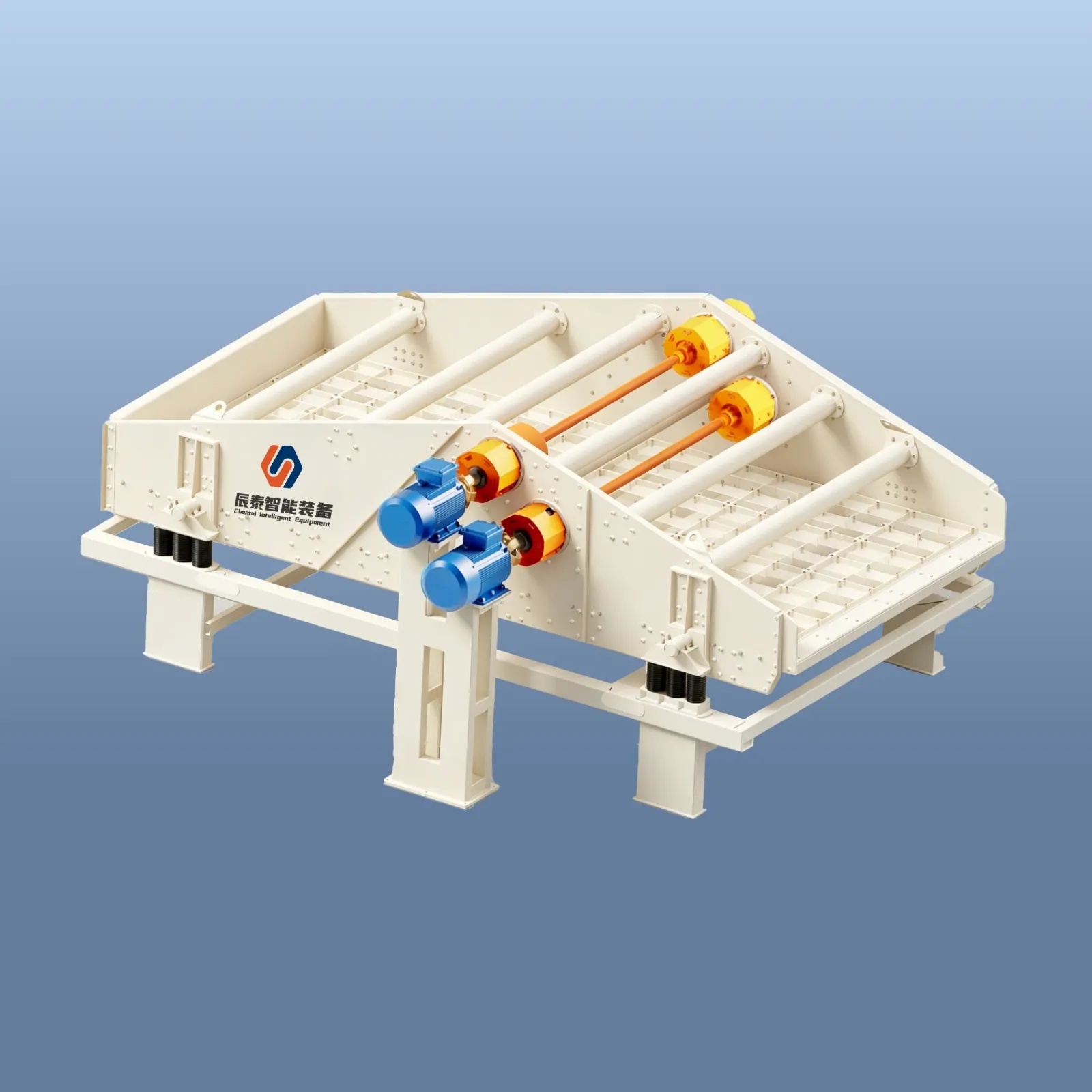
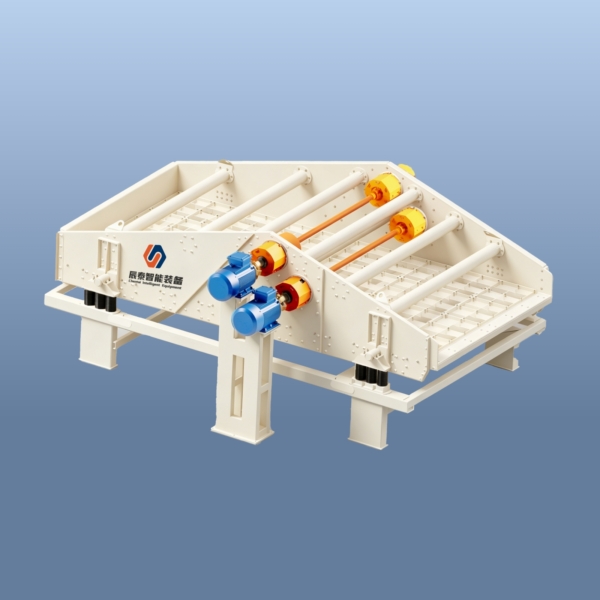
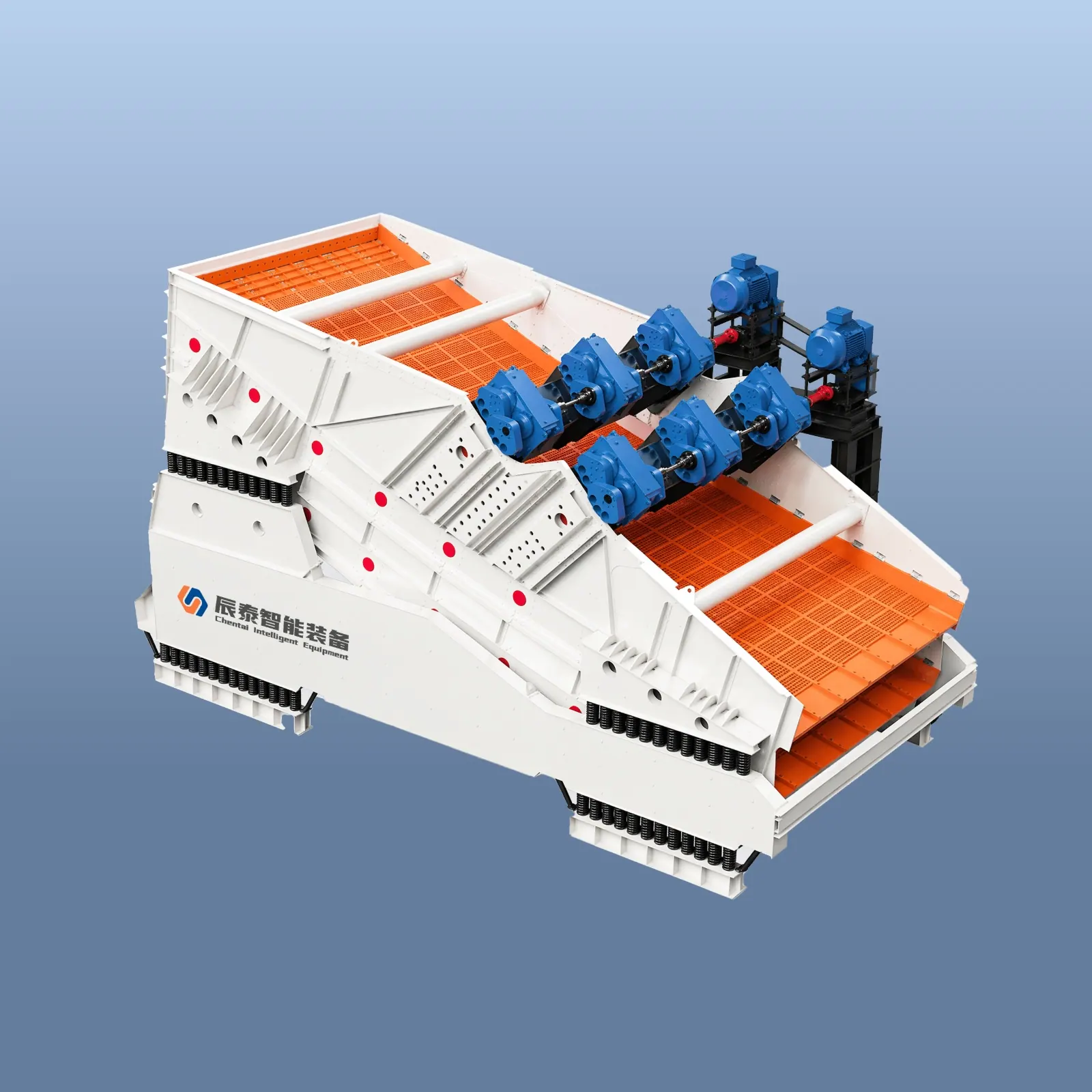
The dewatering screen manufactured by Chentai Equipment is an efficient, energy saving and environmentally friendly vibrating machine. Its unique negative angle screen deck and vibrating action help deliver a product with a lower moisture content, and it is widely used for wet grading, dewatering, desliming and media removal of medium and fine material in mineral processing, sand and gravel aggregates and coal preparation.
Overview
The CTTS dewatering screen is vibration equipment for wet classification, dehydration, desliming and medium removal of medium and fine materials in mineral processing, sand and gravel aggregate and coal preparation. The screen surface is set at a negative angle at the discharge end and the vibration dewatering effect together reduce the moisture content of the finished product.
Product Features
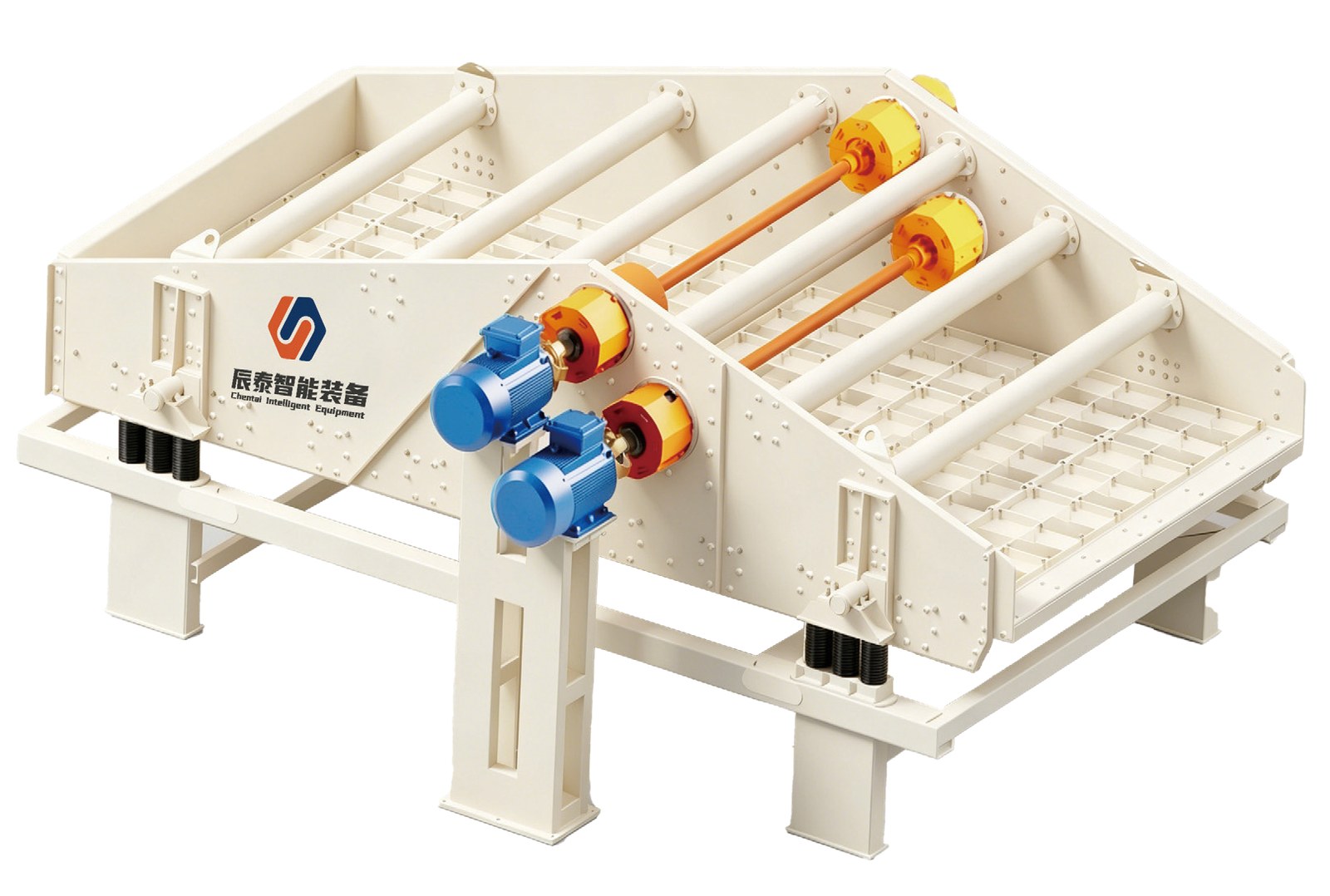
- Two-stage screen surface — A large inclination angle at the feeding end drains water quickly, and the discharge area is arranged at a negative angle so material leaves the deck drier.
- Adjustable vibration — Dual vibration motors with adjustable eccentric blocks let the stroke be adapted to different working conditions.
- Quick screen plate change — The rail-mounted installation design allows screen plates to be replaced easily, which shortens downtime.
- Isolated and quiet — Rubber-covered springs carry the load, isolate vibration and keep operating noise low, and the quick-assembly structure simplifies disassembly.
- Wear-resistant screening surface — The polyurethane screen plate resists wear, is not easily blocked, and its high opening rate supports throughput.
Basic Parameter Table
MODEL · CTTS| Model | Feed size (mm) | Screen width (mm) | Screen length (mm) | Power (KW) | Capacity (t/h) |
|---|---|---|---|---|---|
| CTTS1840 | ≤10 | 1800 | 4000 | 7.5*2 | 50-100 |
| CTTS2045 | ≤10 | 2000 | 4500 | 11*2 | 100-150 |
| CTTS2445 | ≤10 | 2400 | 4500 | 15*2 | 150-200 |
| CTTS3060 | ≤10 | 3000 | 6000 | 22*2 | 200-300 |
or WeChat chentai202605 · +86-570-8885527
Applications
The CTTS dewatering screen removes water and unwanted fines from a wet product stream. Typical duties include:
- Dewatering of fine material after wet classification
- Desliming of mineral processing streams
- Medium removal in coal preparation and dense-medium circuits
- Moisture control for sand and gravel aggregate products
The screen is normally installed after a classifier, cyclone or washing stage, with the underflow fed onto the deck and the drained product conveyed away. Because it handles medium and fine material at feed sizes up to 10 mm, it is usually positioned where the product still carries water rather than where it must be crushed.
How to Choose the Right CTTS Model
Three factors decide which CTTS model fits your operation:
- Feed size — all four models are listed with a feed size of ≤10 mm in the “Feed size (mm)” column, so anything coarser should be screened or reduced upstream.
- Required output — match your tonnage against the “Capacity (t/h)” column: CTTS1840 covers 50–100 t/h, CTTS2445 covers 150–200 t/h, and CTTS3060 covers 200–300 t/h.
- Deck size and power — screen width runs from 1800 mm (CTTS1840) to 3000 mm (CTTS3060) and length from 4000 mm to 6000 mm, with motor power from 7.5*2 kW to 22*2 kW.
Confirm the moisture target as well: deck arrangement and vibration settings are chosen together with the product moisture you need to reach.
Operation & Maintenance Tips
- Adjust the eccentric blocks on the dual vibration motors when the dewatering duty or feed changes; the setting is there to be matched to the working conditions.
- Check the polyurethane screen plate regularly for wear and blinding — a blocked deck reduces both throughput and drainage.
- Use the rail-mounted design when replacing screen plates so the stoppage stays short, and inspect the rubber-covered springs for condition; Chentai after-sales service performs an initial inspection 3–6 months after commissioning.
CTTS Dewatering Screen FAQ
Which CTTS model do I need for about 200 t/h?
According to the “Capacity (t/h)” column, CTTS2445 (150–200 t/h) and CTTS3060 (200–300 t/h) both cover 200 t/h. The actual figure depends on the feed and the moisture target.
What feed size can it handle?
All models in the table are listed with a feed size of ≤10 mm. Material coarser than that should be screened out before the dewatering stage.
How does the screen reduce product moisture?
The two-stage screen surface has a large inclination at the feeding end so water drains quickly, and the discharge area is arranged at a negative angle; combined with the vibration, this gives a lower moisture content in the discharge.
How are screen plates replaced?
The screen plates sit on a rail-mounted installation, so they can be slid out and replaced without dismantling the machine, which keeps downtime short.
Product Gallery
Product photos of CTTS Dewatering Screen from our catalogue.
Other Models in the Same Series
Other optional models for the same process step; compare the basic parameter table and the selection notes, then view the details directly.
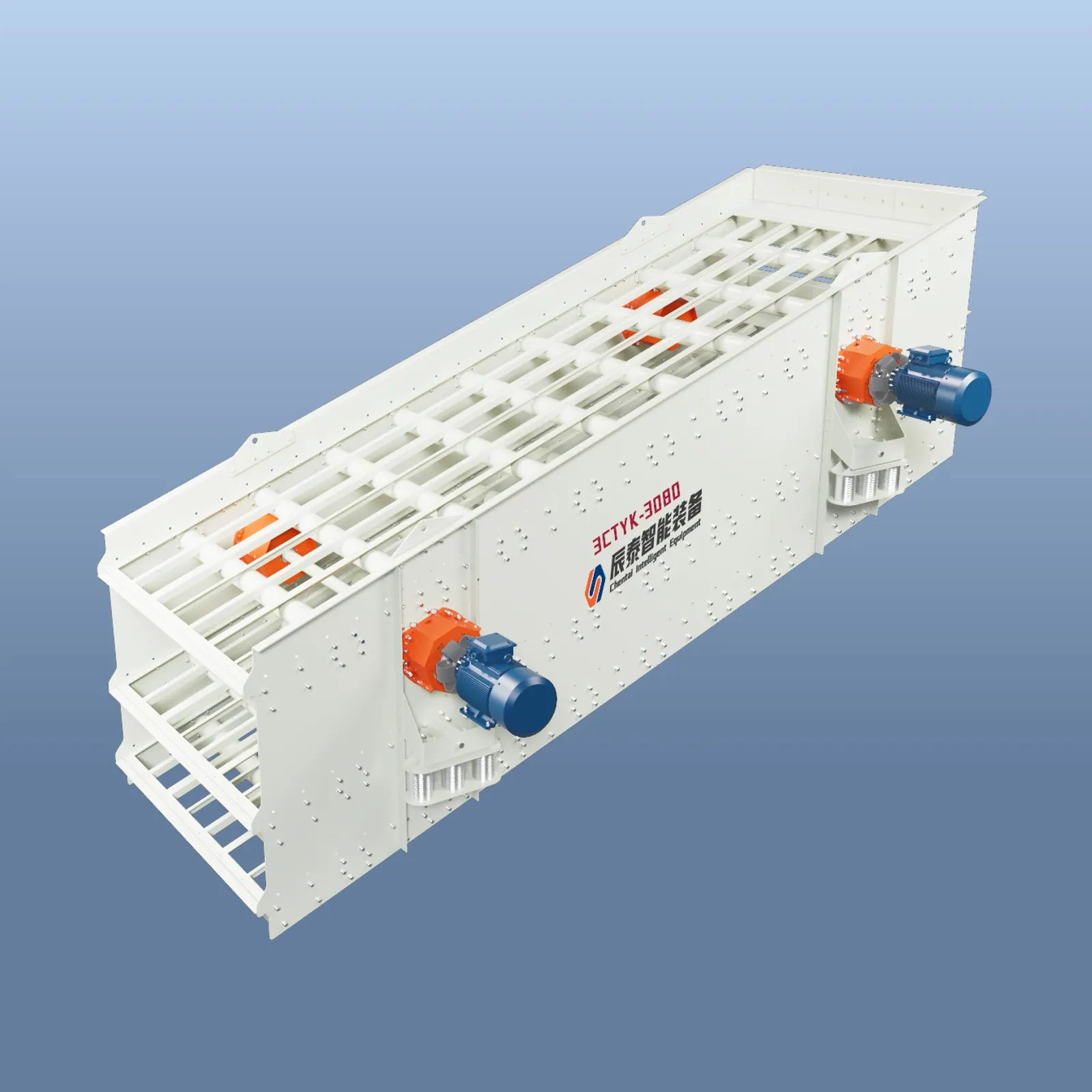 CTYKScreening Equipment
Inclined Vibrating Screen
Inclined Vibrating Screen
The standard CTYK series inclined vibrating screen manufactured by Chentai Equipment is a circular-motion screen for general screening operations such…
- Low energy consumption and eco-friendly
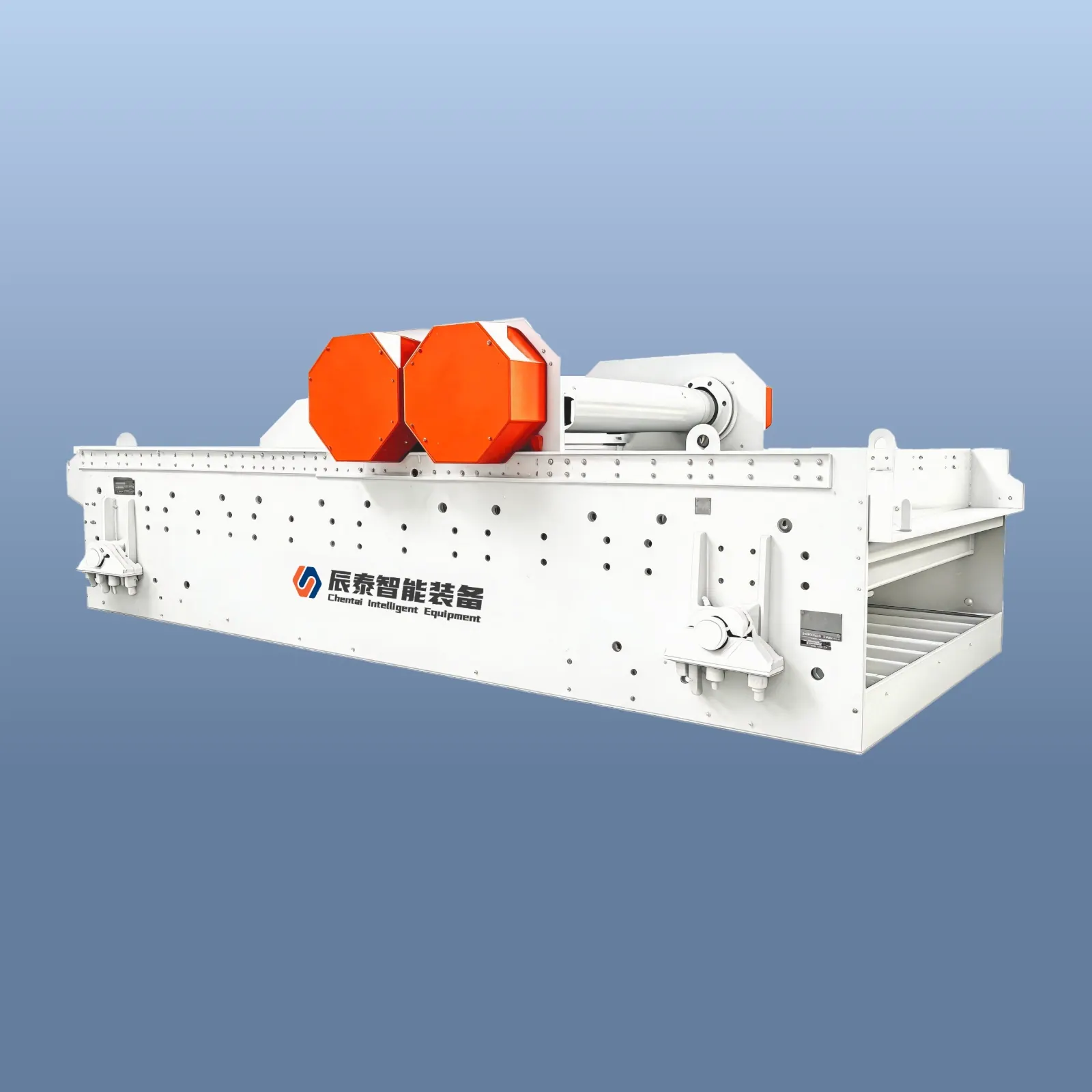 CTLFScreening Equipment
Linear Vibrating Screen
Linear Vibrating Screen
The linear vibrating screen manufactured by Chentai Equipment generates linear vibration through dual motor drive and is widely used in mining, buildi…
- Efficient and accurate
- Stable and reliable
- Rugged and durable
 CTBSScreening Equipment
Banana Screen
Banana Screen
The CTBS series heavy duty banana screens manufactured by Chentai Equipment are designed for heavy duty conditions and suit high load operations such …
- Optimized beam structure
- Reinforced side plates
- Efficient and durable